Care processes and clinical responses to newly detected albuminuria; the Stockholm CREAtinine Measurements (SCREAM) project

Rationale & Objective
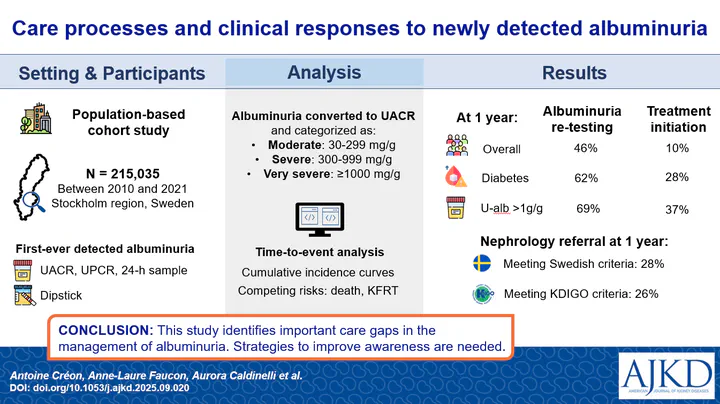
Albuminuria is a predictor of adverse health outcomes. Early detection enables timely clinical management, yet little is known about how clinicians respond to newly detected albuminuria in routine practice. This study sought to characterize clinical care processes for patients with newly detected albuminuria.
Study Design
Retrospective, population-based cohort study.
Setting & Participants
215,035 adults with newly detected albuminuria between 2010 and 2021 in Stockholm, Sweden.
Exposures
Albuminuria severity, categorized as moderate (≥30-299 mg/g), severe (300-999 mg/g), or very severe (≥1000 mg/g). All methods of albuminuria testing were considered: dipstick albuminuria or proteinuria tests as well as 24-h and spot albumin concentrations.
Outcomes
Proportion of patients re-tested for albuminuria, frequency of the methods used for re-testing, rates of nephrology referral, and rates of initiation of treatment with renin–angiotensin system or sodium-glucose cotransporter-2 inhibitors. Analytical Approach: Descriptive analysis of proportions and cumulative incidence of outcomes based on time-to-event analysis accounting for the competing risks of death and kidney failure.
Results
90% of participants had moderate, 8% had severe, and 2% had very severe albuminuria. Re-testing rates within one year were 46%, ranging from 45% for moderate albuminuria to 70% for very severe albuminuria, with lower rates among individuals without diabetes. Only 28% of those with an indication were referred to a nephrologist, and renin–angiotensin system/sodiumglucose cotransporter-2 inhibitor initiation rates at one year were 10%, 12%, and 37% for moderate, severe, and very severe albuminuria, respectively, with substantially lower rates in individuals without diabetes.
Limitations
The findings are specific to Stockholm’s healthcare system and may not be generalizable to other regions, healthcare models, or cultures.
Conclusions
This study identified important care gaps in the Swedish management of albuminuria. A substantial proportion of individuals, including those with very severe albuminuria, lacked monitoring and failed to receive antiproteinuric treatments. Strategies to improve clinician awareness and adherence to guideline-recommended care may mitigate the long-term consequences of chronic kidney disease progression.